When people think about lumber on a jobsite, they usually think about framing—the material that ends up in the finished structure. But a significant portion of lumber never makes it into the building itself, and it still plays an essential role in keeping the job moving.
Every active site depends on a range of non-structural applications that fall outside of code but are important for day-to-day progress, including temporary railings, access ramps, bracing, concrete pours and general jobsite safety and protection. These are the pieces that make the site workable and safe, especially as conditions shift, access points change and crews need to adjust how they move and work across the jobsite.
Why Lower-grade Lumber Fits these Applications
These uses don’t require appearance-grade material or tightly specified structural lumber. What matters is that the material is solid, usable and capable of doing the job, even if it includes knots, wane or other characteristics that would disqualify it from primary framing.
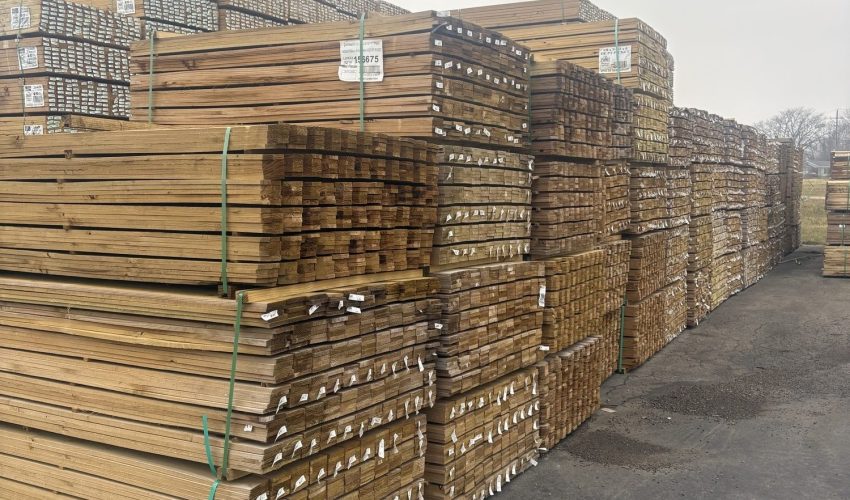
That’s where downfall lumber becomes a practical fit, because the material still has strength and workability, just without the consistency required for finished construction. For many contractors and site managers, this is a straightforward way to control cost while making better use of available material, reserving higher-grade lumber for structural applications and using lower-grade material where performance requirements are different.
How it’s Used on Active Jobsites
You see this most clearly once a project is underway and evolving. Temporary stairs and ramps are built, modified and sometimes rebuilt as the site develops, requiring lumber that can be cut and fastened quickly without concern for finish quality. Bracing and blocking are used to stabilize materials, support layout work and maintain alignment during construction, often in ways that are short-term but essential.
Guard rails and barriers define work zones and protect crews around open edges, while walkways and protective structures help preserve finished areas and maintain safe access across the site. In each of these cases, the expectation isn’t permanence, but reliability over the life of the project.
What to Consider when Sourcing
When sourcing lumber for these applications, the priorities shift slightly but remain important. Consistency in dimension helps crews work faster and reduces the need for adjustments in the field, while overall strength and integrity makes sure the material holds up under use. Volume and availability also play a role, since these materials are often used in cycles throughout a project, and having a steady supply helps avoid delays. In many cases, mixed loads provide the flexibility to support multiple uses at once, allowing teams to match material to application without overcommitting to a single specification.
How We Can Help
We see steady demand for downfall lumber in these types of site utility applications, and we also work with suppliers who have material that doesn’t fit primary structural channels but performs well in these environments. The connection between those two sides is where the value is created, especially when inventory that might otherwise sit can be put to work immediately.
If you’re sourcing lumber for site needs or looking to move material that doesn’t fit your core channel, it’s worth a conversation. Our expert traders can help you find the right mix and keep that material moving where it’s needed. Give us a call with general questions or submit a request for a quote and see how we can positively impact your bottom line.