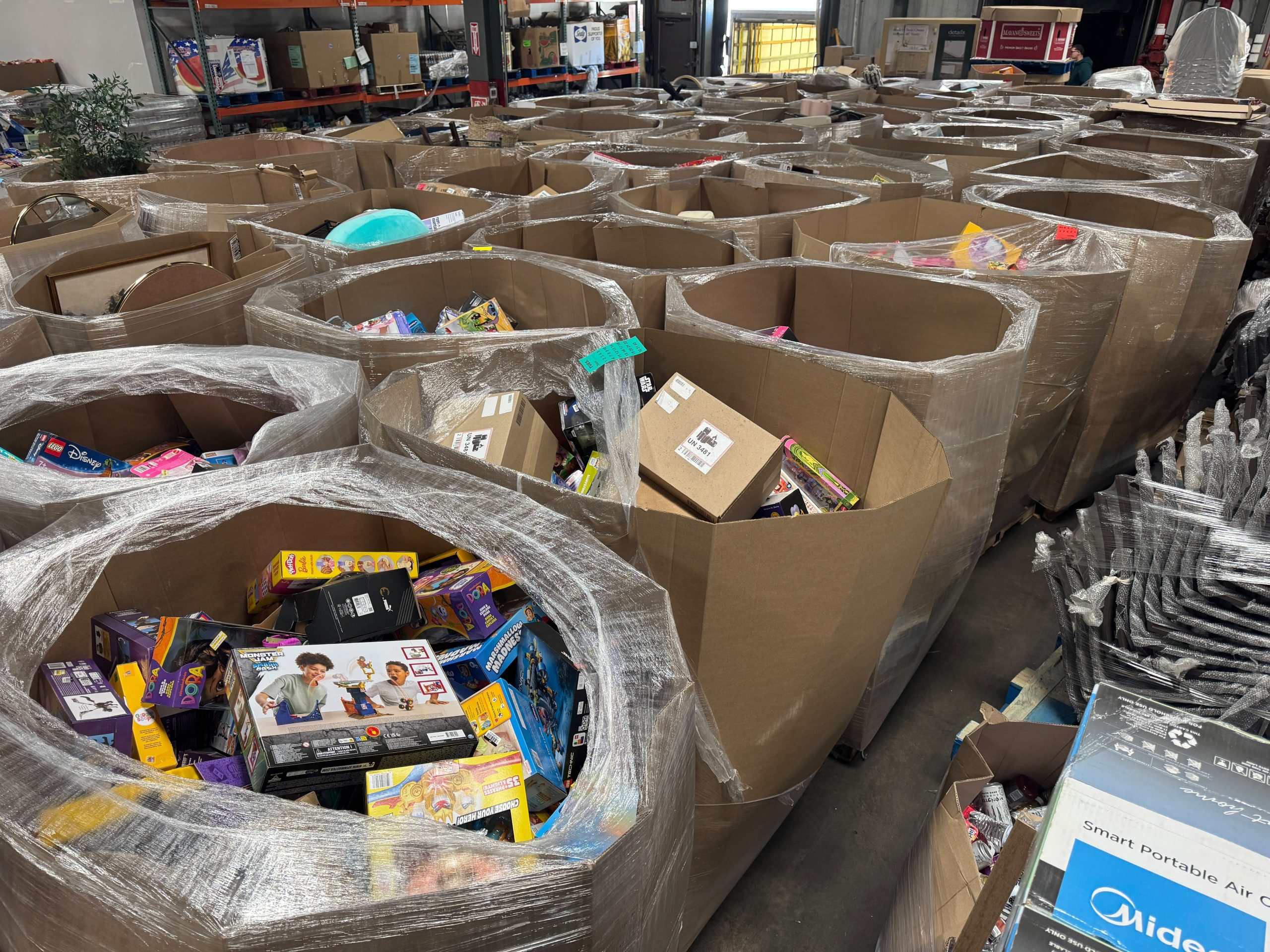
In distribution centers and manufacturing environments, wood materials are used constantly, even if they’re not always called out. Walk through any warehouse and you’ll see OSB, plywood and lumber built into the system—laid across rack beams, stacked under product, cut into blocks and spacers, or layered between loads to keep everything stable.
These aren’t one-off uses. They’re part of daily operations. Materials are cut, moved, reused and replaced as product flows through the facility, and the expectation is simple: the material needs to hold up, do its job and be available when it’s needed.
Racking: Creating Stable Storage Surfaces
One of the most common uses for panels is racking. OSB and plywood sheets are laid across rack beams to create a solid surface when pallets are inconsistent or when product isn’t palletized at all. Instead of relying on open beams, the panels distribute weight evenly and provide a stable base for storage.
This is especially useful in environments where loads vary in size or where smaller items need to be stored directly on the rack. The panel doesn’t need to look clean or uniform. It just needs to support the load without sagging or breaking down over time.
Dunnage and Blocking: Stabilizing Loads
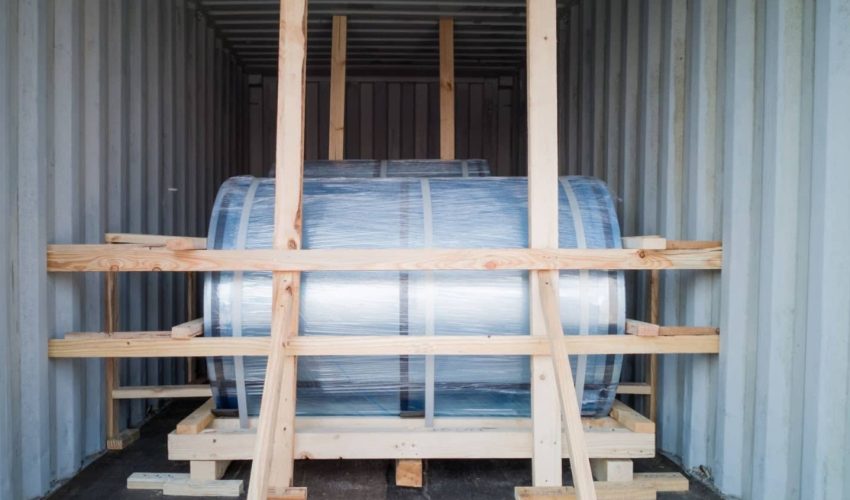
Lumber plays a central role in dunnage and blocking, which are used to support and secure products during storage and transport. You’ll see dunnage placed under machinery, bundled materials or large components to keep them off the ground, level and easy to handle with forklifts. Blocking goes a step further, with pieces cut and positioned to keep items from shifting, tipping or sliding during movement.
These applications are all about function. Lumber is cut to size on demand, often in rough dimensions, and used in ways that change from one load to the next. Downfall and utility lumber are a strong fit here because they can be worked quickly and still provide the strength needed to stabilize heavy or irregular items.
Separators: Protecting and Organizing Product
Panels also show up as separators between layers of product, particularly in stacked loads. Thin plywood or OSB sheets are placed between layers to prevent surface damage, distribute weight and keep products from shifting into each other. This is common with flooring, tile, packaged goods and other materials that are stacked and staged before shipping.
In these cases, the panel acts as a buffer. It keeps the load organized and reduces the risk of damage without adding complexity to the process.
Why Lower-Grade Material Fits These Applications
Across all of these uses, appearance has no value. What matters is strength, consistency and availability. Panels with surface variation, patches or cosmetic defects still perform well as rack decking or separators, and lumber with knots or wane works just as effectively for blocking and dunnage.
That’s why our B-grade and downfall materials are widely used in these environments. They provide the performance needed for industrial applications without the cost associated with higher-grade material that would go unnoticed in use.
Sourcing For Volume and Flexibility
For most operations, the challenge isn’t finding material once. It’s maintaining a steady supply. Racking, dunnage and blocking are ongoing needs, and materials are consumed and replaced as part of normal workflow. That makes volume, availability and flexibility more important than matching a specific spec.
Mixed loads and surplus inventory allow teams to stay adaptable. Instead of waiting on a single product type, they can source material that meets performance requirements and keep operations moving without interruption.
Keep Your Operation Moving
If you’re sourcing OSB, plywood or lumber for racking, dunnage, blocking or separators, it’s worth taking a practical approach. The right material doesn’t need to be perfect. It needs to perform.
Reach out today for a quote or contact us to get started.