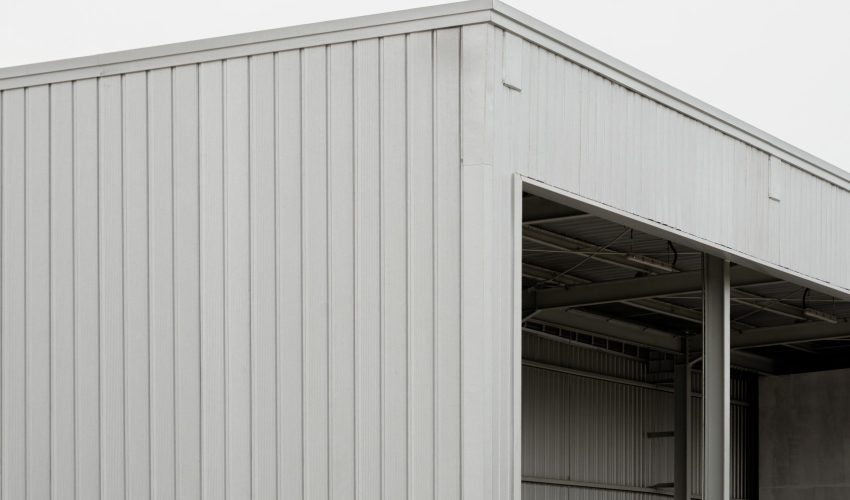
Not every wall on a building carries the same expectations. In industrial parks, warehouses and commercial facilities, there’s a clear distinction between what’s facing the street and what’s working behind the scenes. Front-facing elevations are often designed to meet brand standards or tenant expectations, while utility walls, service areas and back-of-house facades are built to perform, protect and hold up over time.
That difference creates an opportunity. Builders and facility owners don’t need the same level of finish or uniformity across every surface, and trying to apply one standard across the entire building often leads to unnecessary cost.
Where variation becomes acceptable
Back-of-house areas tend to be more forgiving when it comes to appearance. Loading dock walls, service corridors, storage-facing facades and side elevations that aren’t visible from primary access points can tolerate variation in color, finish or texture without affecting how the building is used or perceived.
What still matters is consistency within the installation and overall durability. Panels need to align, fasten correctly and hold up to weather, impact and daily use, but slight differences between lots or runs typically don’t create issues in these areas. In many cases, those variations are barely noticeable once the building is complete and operational.
Why B-grade siding fits these applications
This is one of the most practical use cases for B-grade and surplus siding. Material that may not meet strict visual standards for street-facing facades can still perform well on utility walls and secondary facades. Minor color variation, discontinued finishes or slight inconsistencies in appearance don’t affect the core function of the siding, which is to protect the structure and maintain a clean, finished surface.
For builders working across large footprints, that flexibility allows them to allocate higher-grade material where it’s visible and use more cost-effective options where performance is the priority. It’s not about lowering standards. It’s about applying the right material in the right place.
How this plays out on active projects
On most industrial and commercial builds, you’ll see a mix of siding decisions based on visibility and use. Street-facing facades may follow a tighter spec with consistent color and finish, while side and rear elevations use available material that still installs cleanly and performs as expected. Loading dock areas, equipment enclosures and service zones are often where this approach is most visible, since these areas are designed for function first.
That flexibility also helps keep projects moving. When builders have access to siding that fits the application without waiting on a specific run or color match, they can maintain progress without introducing delays or reworking plans.
What to consider when sourcing siding
When sourcing siding for these applications, the focus shifts slightly but remains practical. Durability and weather resistance are still essential, especially in exposed environments, and material needs to install consistently across the wall system. At the same time, buyers have more flexibility in color variation and finish, which opens up more options in the market.
Volume also plays a role. Large projects require enough material to complete entire elevations or sections without interruption, so sourcing from available lots that can cover that scope becomes important. In many cases, mixed or surplus inventory provides the flexibility to meet those needs without overcommitting to a single spec.
Put the right siding in the right place
If you’re working on industrial, warehouse or commercial projects and need siding for utility walls, service areas or non-street-facing facades, there’s an opportunity to source material more efficiently without compromising performance. We regularly work with builders to match B-grade and surplus siding to these applications so projects stay on track and costs stay controlled.
Reach out today for a quote or contact us to see what siding inventory is available for your next build.